Montessori foundations
Explore Maria Montessori’s legacy, the planes of development, the child’s unique mind, and freedom within limits.
 IndabaINSTITUTECourses
CARE · Caregiver programme · 0–6
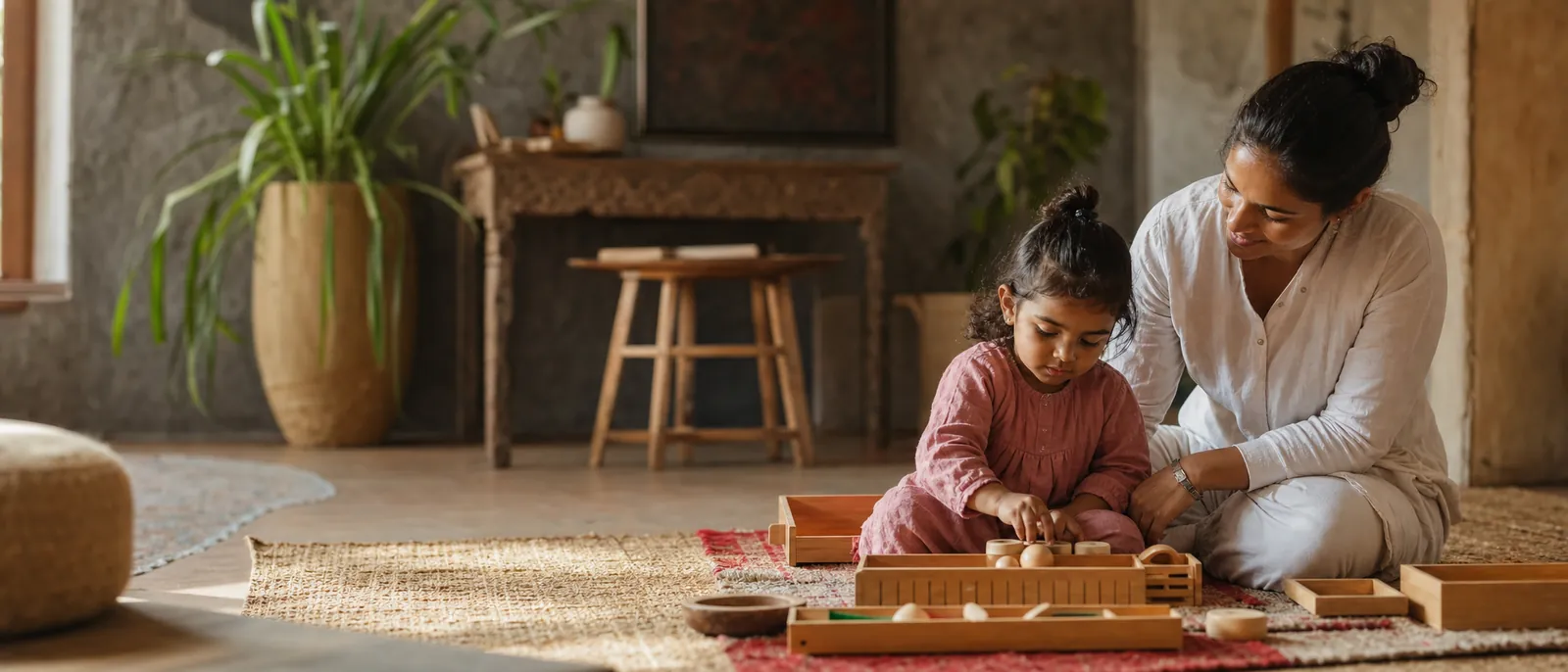
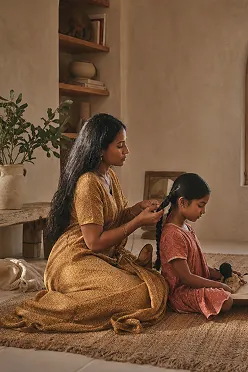
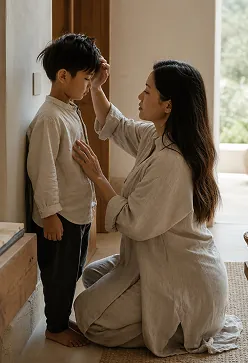
Bring confidence, attention and practical skill to the care of young children at home. CARE combines Montessori-informed child development with everyday routines, professional communication, nutrition and care for the natural world.
Pathway
Caregiver programme
Age focus
0–6
Next cohort
To be confirmed
Format
Facilitated, in-person training
YOUR PATHWAY
IDEAS INTO PRACTICE
The themes below introduce the educational focus. Your confirmed programme handbook will specify the curriculum and requirements.
Explore Maria Montessori’s legacy, the planes of development, the child’s unique mind, and freedom within limits.
Practise observation, respectful responses and self-reflection. Consider how the adult’s preparation supports a child’s confidence and independence.
Explore gross and fine movement, language and culture, social and emotional development, grace and courtesy, cognition, sensorial learning and early mathematics.
Prepare a home that invites participation. Explore activities of daily living and the caregiver’s role in sleep and toileting routines.
Build trust through confidentiality, clear communication with parents, professional boundaries and thoughtful time management.
Explore food and meal preparation, growing and caring for plants, and everyday ways to involve children in care for the living world.
THE LEARNING EXPERIENCE
Learn through facilitated discussion, demonstrations, hands-on activities, observation, role play and peer learning. Each day begins with stillness and reflection and closes with journalling and gratitude. The manual includes developmental reference tables for movement, language, social and emotional development, and cognition.
Bring your questions and your experience. Professional preparation asks us to examine our own responses as carefully as the environments we prepare for children.
The V01 outline describes 20 training days across 23 modules, with a daily rhythm of 09:00–17:00 including breaks and reflection. This is a programme outline, not a confirmed cohort calendar. Digital Storytelling content for Day 20 remains in development.
Develop practical understanding and confidence for caring for young children in the home: observing development, preparing supportive environments, encouraging participation in daily life and working thoughtfully with families. Award and certification arrangements are to be confirmed with admissions.
Programme-specific teaching appointments are to be confirmed. Meet the wider Institute community while admissions prepares the details for your cohort.
Meet our peoplePLAN YOUR STUDY
Based on the supplied Indaba Caregiver Training Program facilitator manual, Version 01, October 2026. The manual describes the learning programme; cohort dates, fees, venue, entry requirements and award arrangements are not specified. No current fees or dates are inferred from older listings.
Your admissions journeyREAD BEFORE YOU APPLY
Read the full facilitator training manual, including the programme outline, session activities and developmental milestones appendix.
PDF · 2.7 MB · Programme manual · V01
Version 01 · October 2026 · 117 pages
Read care programme manual (PDF, new tab) ↗Download PDF ↓A LITTLE MORE CLARITY
CARE is presented as a distinct Montessori-informed caregiver programme. The supplied manual does not specify an AMI award or accreditation. Ask admissions about certification for the cohort you are considering.
CARE focuses on caregivers working with young children in the home. The Institute’s CoRE pathway supports community early childhood practitioners and their educational settings. Admissions can help you choose the pathway that fits your role.
Version 01 outlines 20 in-person training days, usually 09:00–17:00, with facilitated sessions, breaks, practical activities and reflection. Confirm the calendar and attendance requirements with admissions.
Day 20 is listed as Digital Storytelling in the programme outline, but its session content is still in development in Version 01. Ask the team for the latest outline.
Dates, venue, fees, entry requirements, assessment and certification are to be confirmed. Enquire with the Institute before making arrangements.
A PERSONAL CONVERSATION
Tell us what brings you here. Please do not include children’s details or sensitive personal documents.
admin@indabainstitute.org
+27 63 649 8191
B14 Newberry House Montessori School, Lourensford Wine Estate, Somerset West, 7130, South Africa
Please arrange visits with the team.
KEEP EXPLORING
AMI · Diploma
010–3years
Prepare to guide children through the first three years of life. This diploma brings Montessori pedagogy together with developmental study, observation and practical work in infant and toddler environments.
AMI · Diploma
023–6years
Prepare to guide a Montessori Children’s House for children aged three to six. Study child development and the purposeful use of practical life, sensorial, language and mathematics materials, supported by observation and teaching practice.
AMI · Certificate
033–6years
Discover how to support children and the guide in a Montessori Children’s House. This introductory certificate develops understanding of observation, independence, language and the prepared environment; it is distinct from the full 3–6 teaching diploma.